
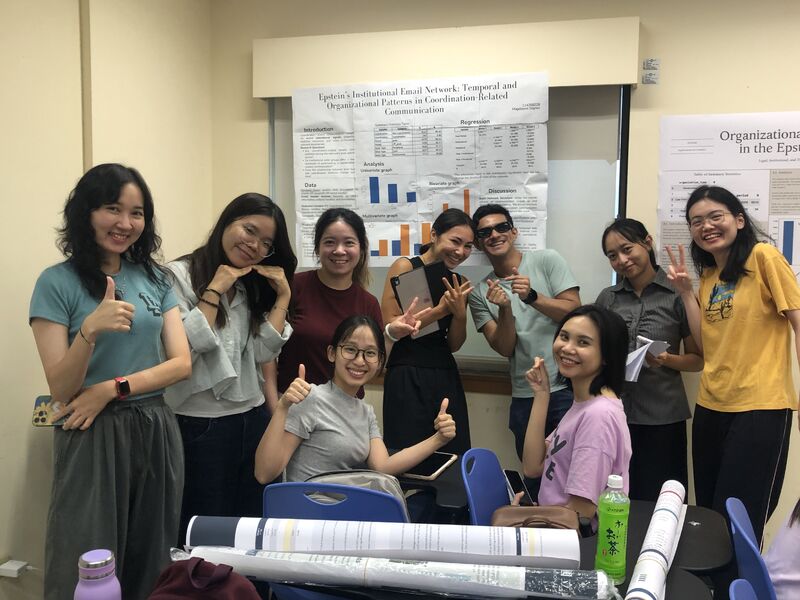
Students in the Data Science seminar use the lab's Epstein Files Database to develop exploratory text, network, and statistical analyses.
Student-led analysis
Students in my Data Science seminar took a first look at the Organization of Power Lab’s Epstein Files Database. Students from NCCU’s International Master’s Program in Asia-Pacific Studies, International Master’s Program in International Studies, and College of Social Sciences developed deep-dive analyses that demonstrated the range of questions researchers can investigate with the collection.
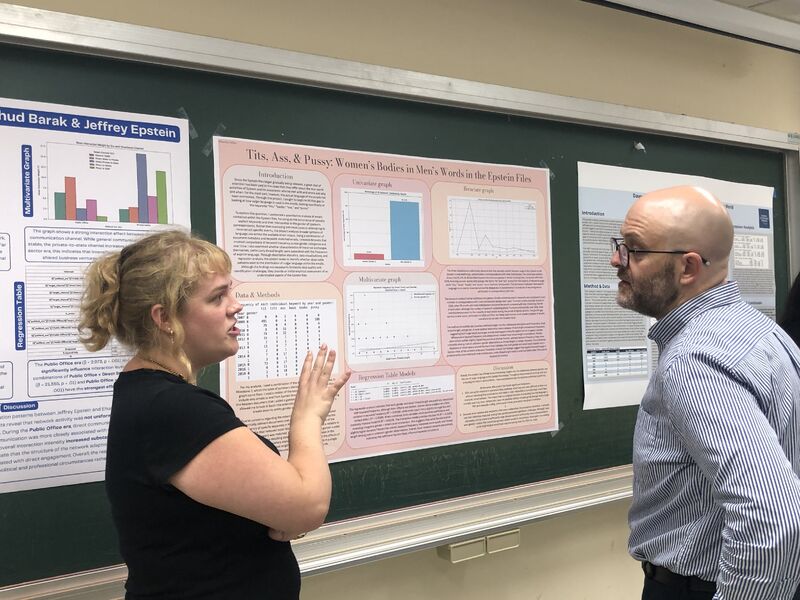
From released records to a searchable corpus
The Epstein Files Project is a joint academic and investigative effort involving Benjamin Thelen, Jacob Reidhead, and a team of student volunteers. The collection was built from PDFs released through the U.S. Department of Justice website during the project, including files that were later removed from the site. The lab extracted full document text, email headers, email-header entities and addresses, and created full-text search across the text fields.
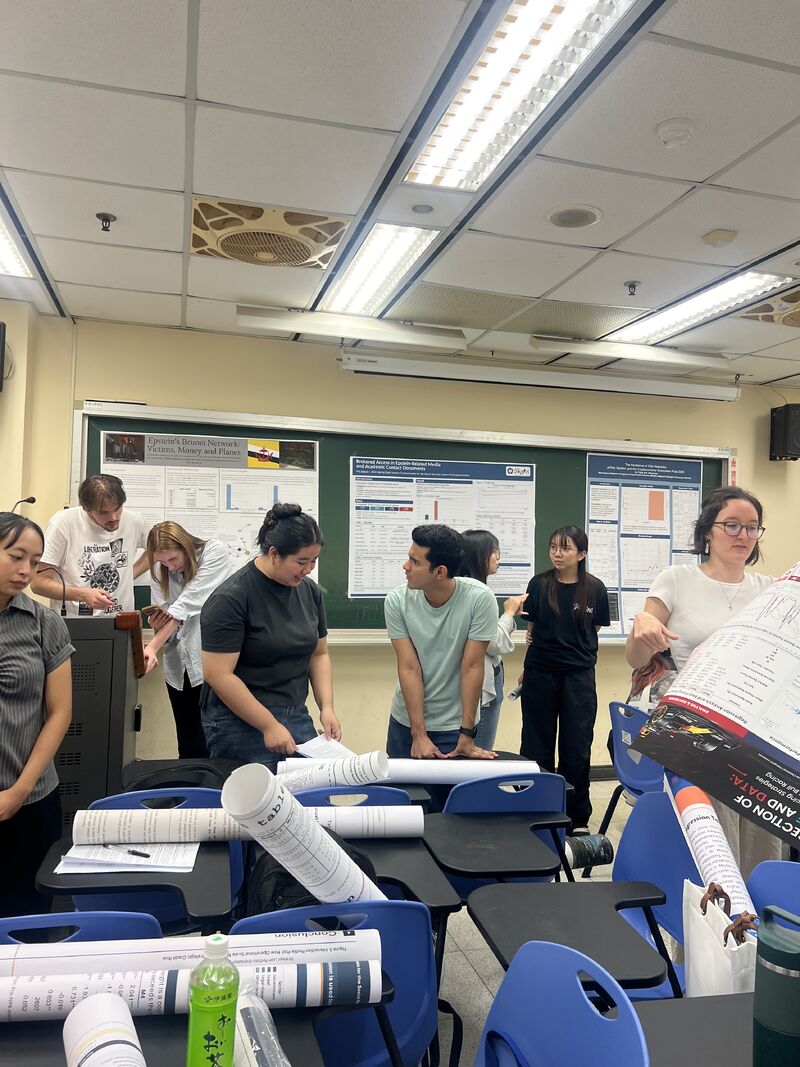
These early projects illustrate how a large documentary archive can support archival and media research, qualitative and computational text analysis, and social network analysis. A record’s inclusion in the source collection, or a person’s appearance in a document, does not by itself establish misconduct; every claim requires careful attention to context and corroborating evidence.
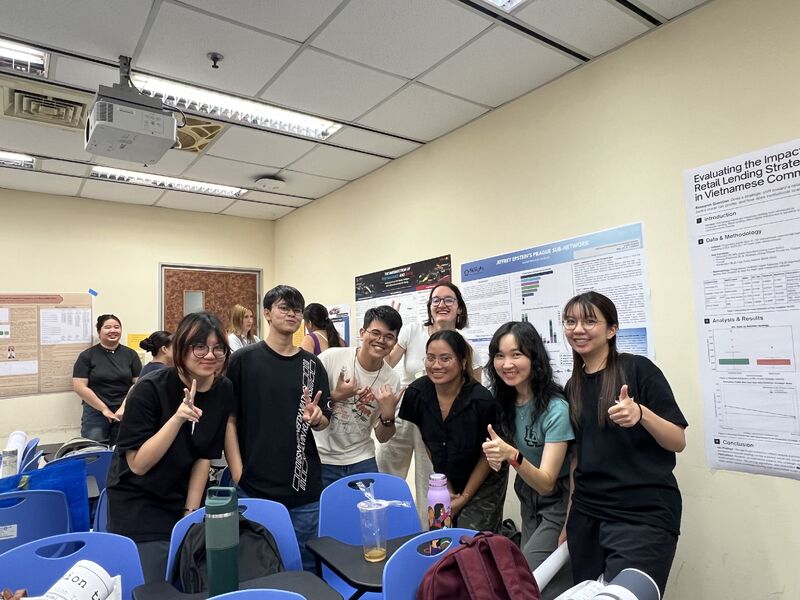
Next steps and collaboration
Students will continue developing selected analyses toward publishable findings. We welcome collaboration with students and researchers interested in working with the collection through archival research, computational text analysis, or network analysis.
Explore the Epstein Files Database and its documentation on the Organization of Power Lab website.