
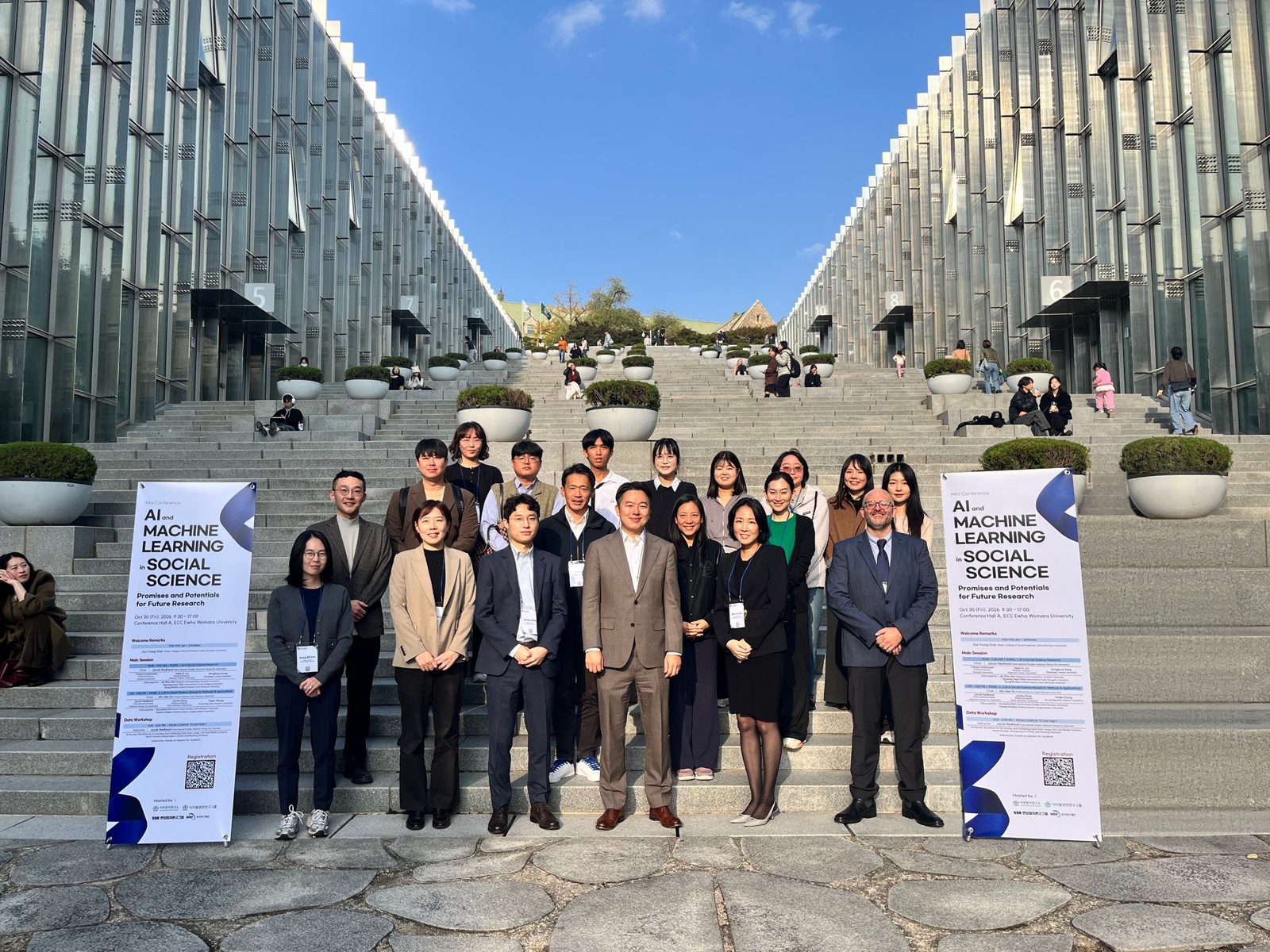
A day of panels and a hands-on workshop at Ewha on a five-step, human-supervised workflow for turning large text corpora into validated research datasets. The tutorial is now online.
A day on AI in social science
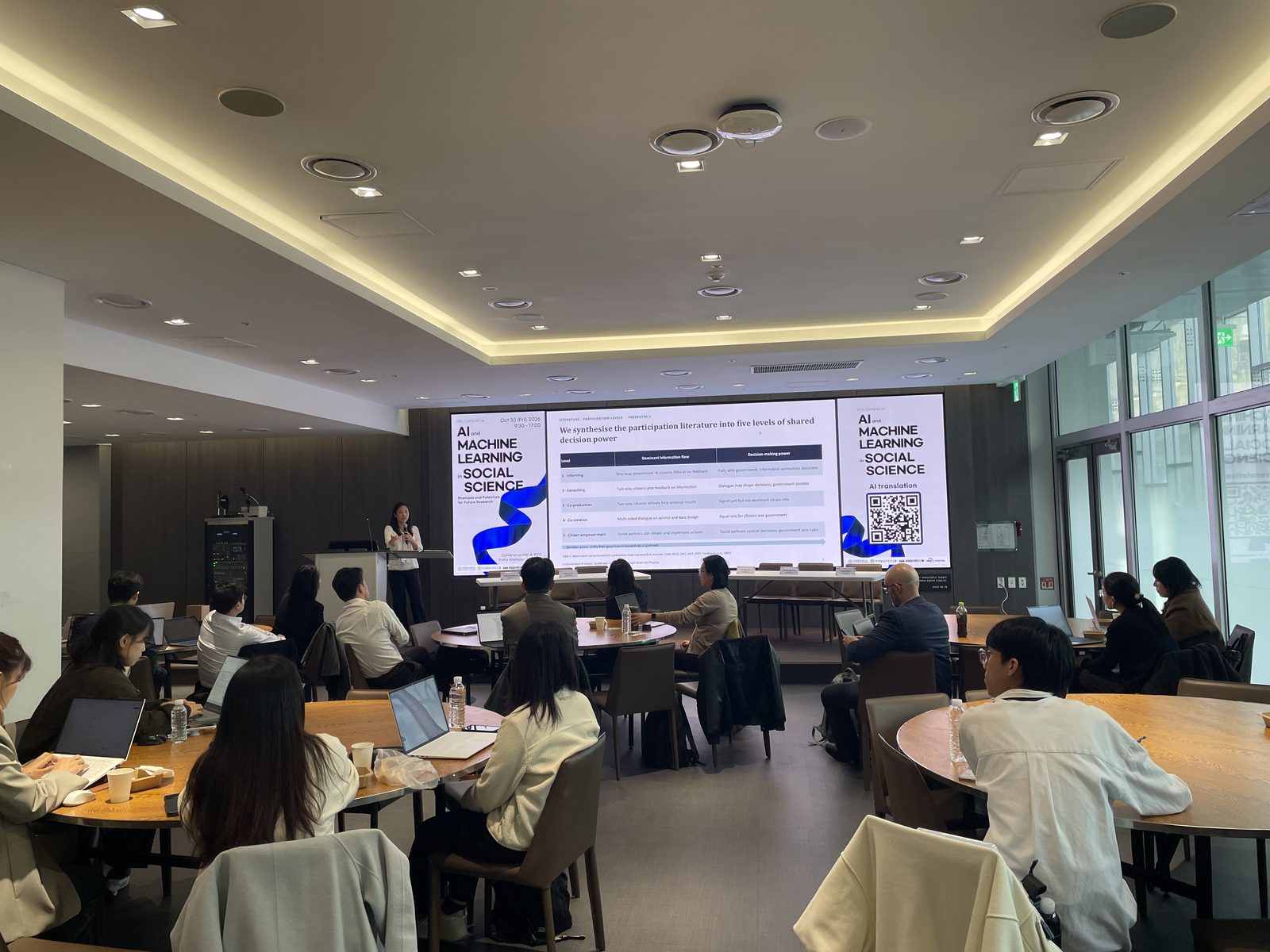
On Friday, October 30, 2026, Ewha Womans University hosted a mini-conference and hands-on workshop on AI and machine learning in social science. Researchers spent the day in POSCO Hall weighing what generative AI and large language models open up for research and what they put at risk.
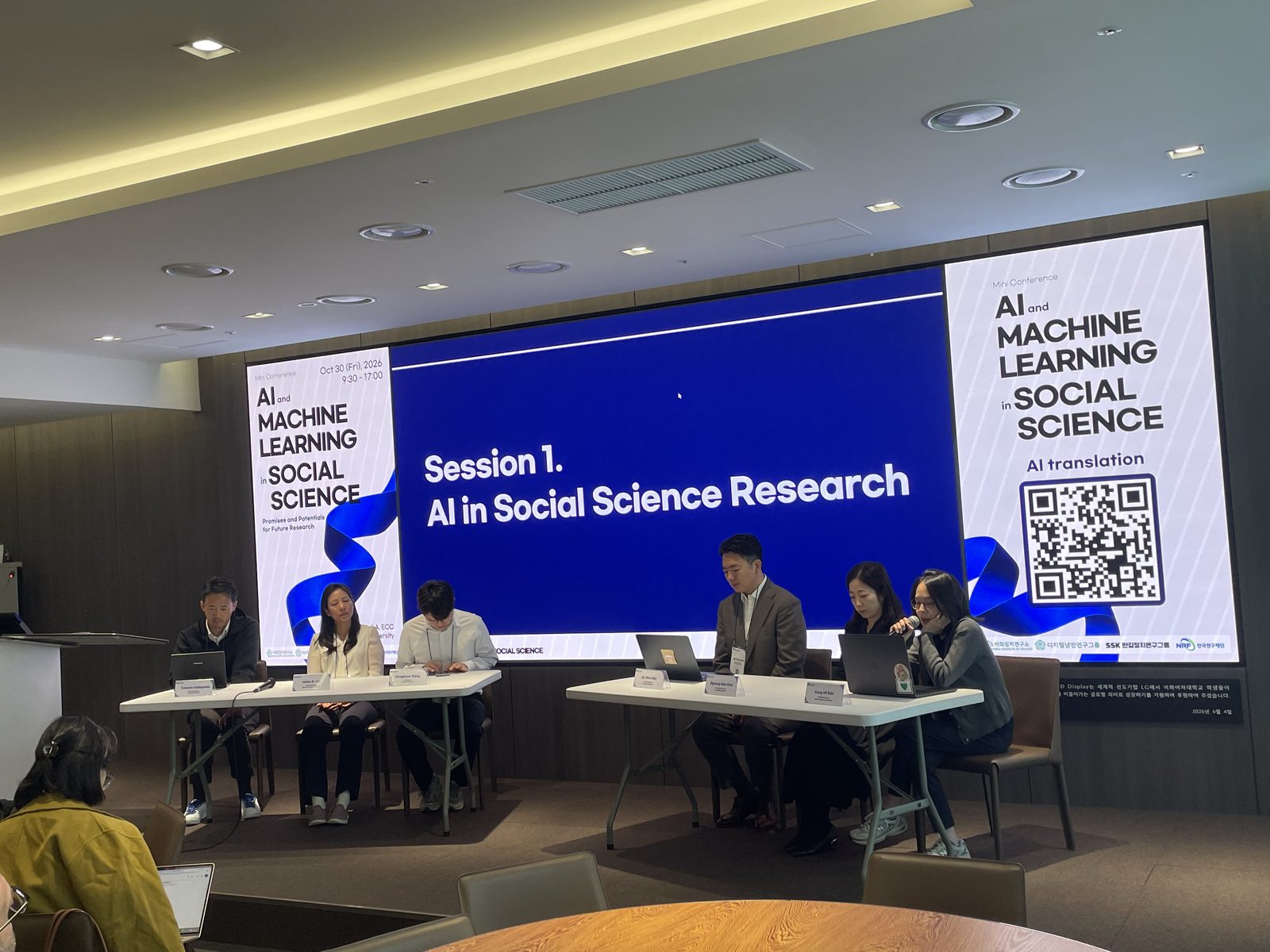
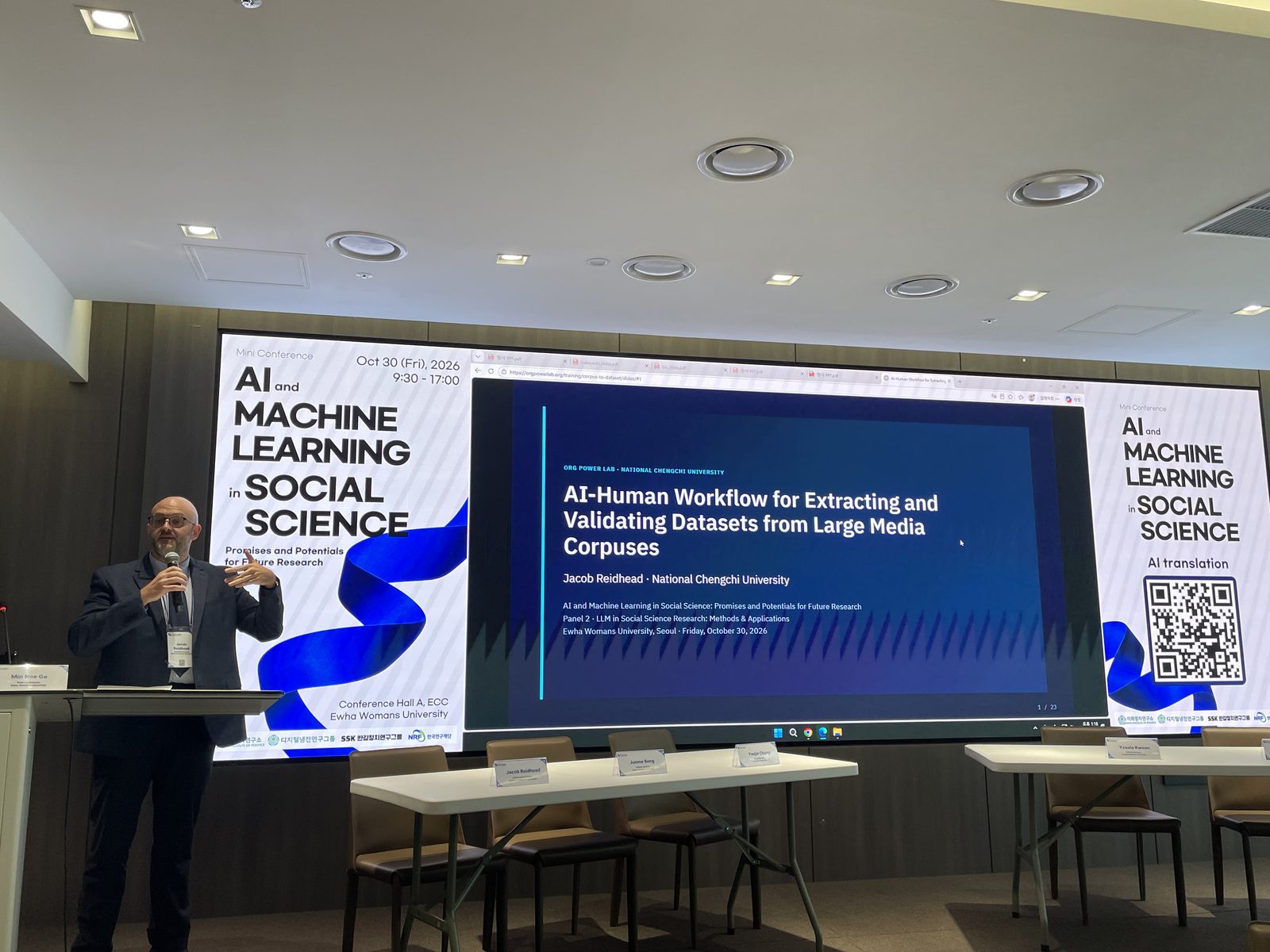
I chaired the morning panel, presented our paper on an AI-human workflow for extracting and validating datasets from large media corpora, and led the afternoon workshop.
Five steps from corpus to dataset
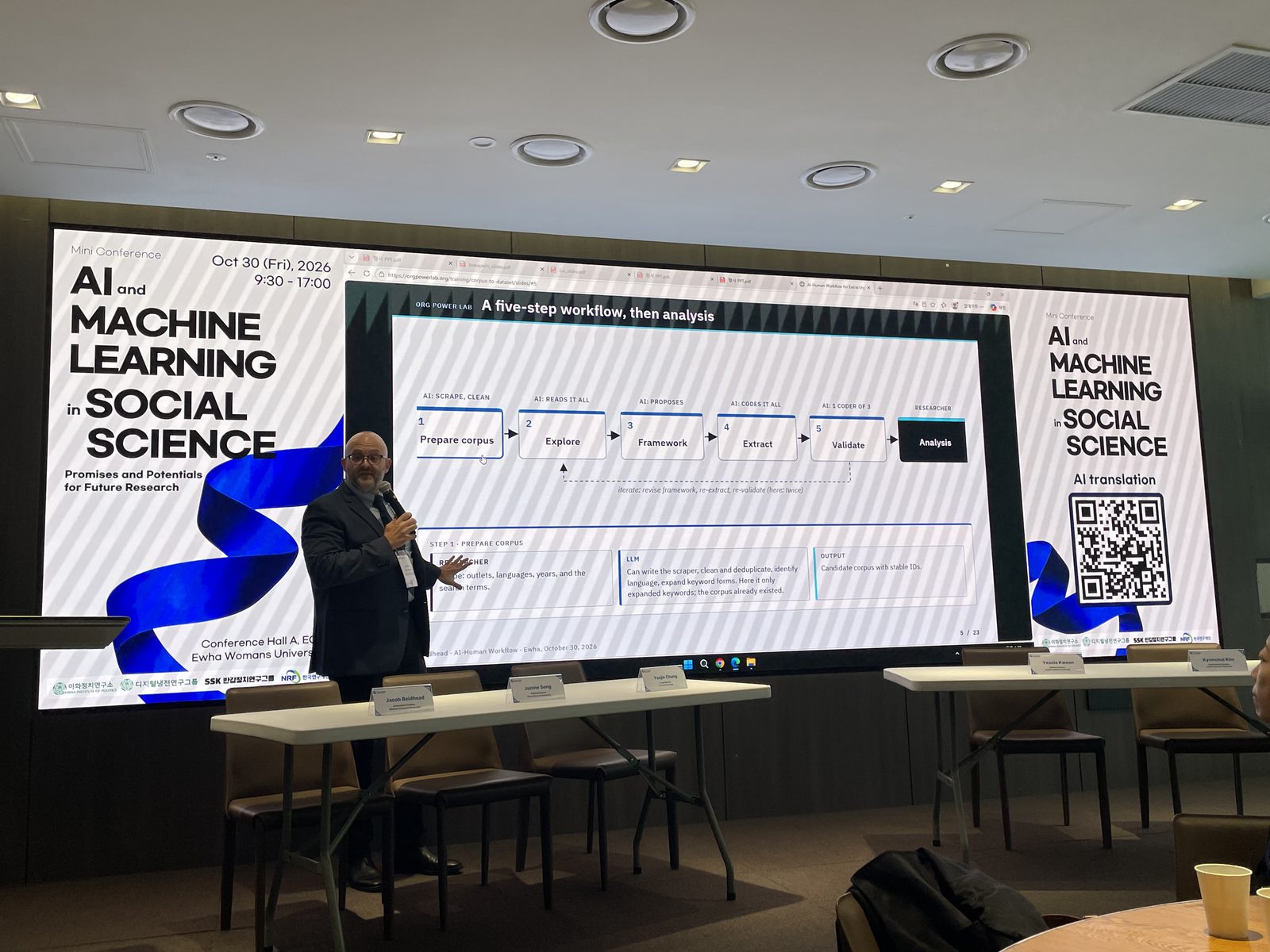
The workshop followed the same five steps we use in the lab. A keyword search narrows a large corpus to the relevant documents. The model then explores those documents open-endedly. We turn what it finds into a codebook and a schema that we approve, and the model uses that codebook to extract a dataset with one row per unit of analysis. Finally, human coders check the extraction with standard inter-coder reliability statistics. If agreement is too low, we revise the codebook and extract again. Only a validated dataset goes on to analysis.
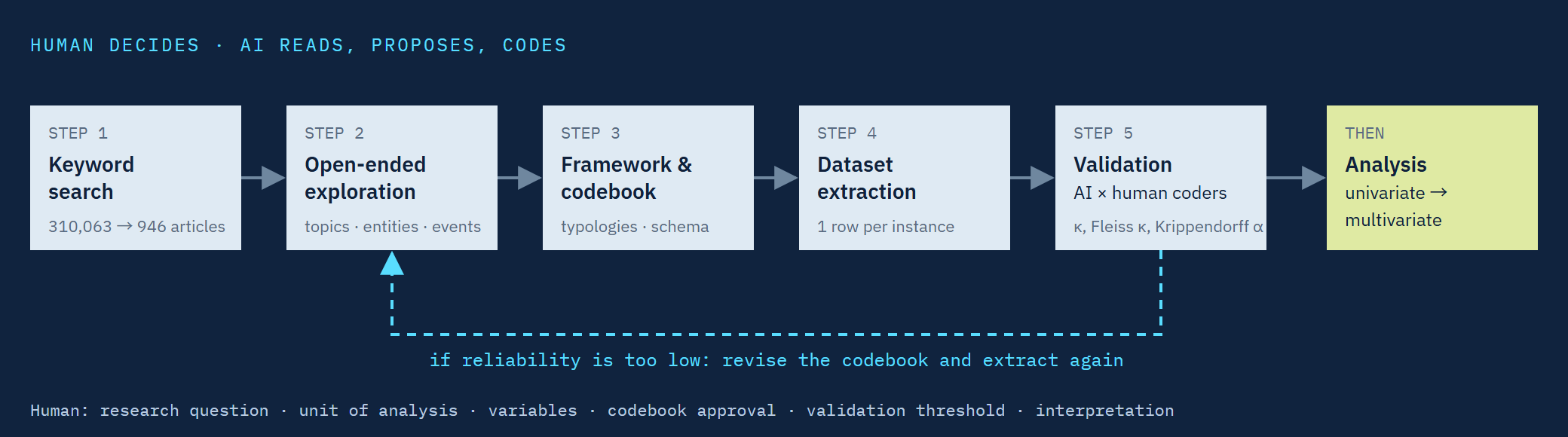
The model does the reading, the proposing and much of the structured coding. The research question, the codebook and the decision to accept a dataset stay with the researcher.
Hands-on, on their own laptops
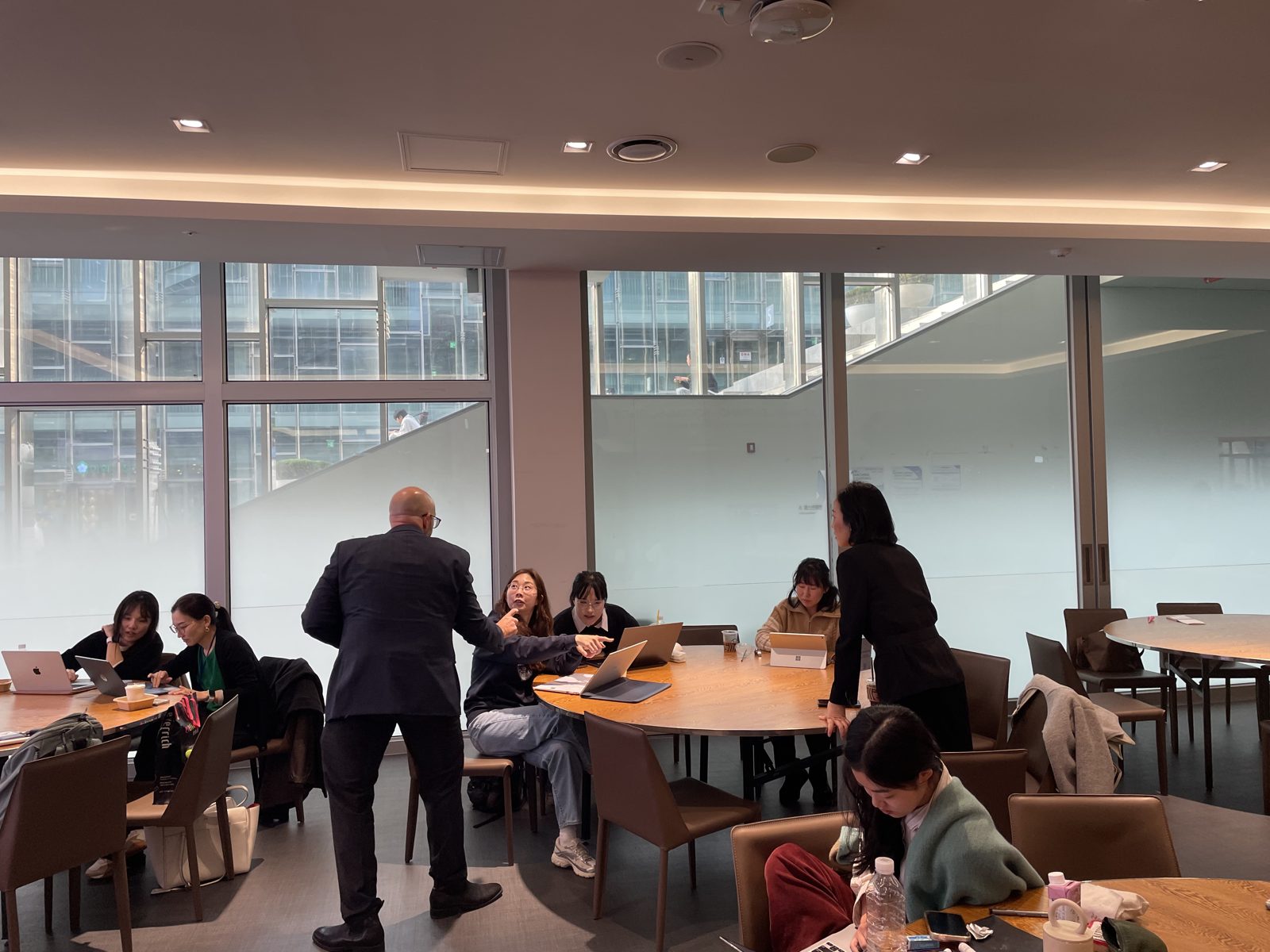
The workshop was built around doing the work rather than watching it. Of its two hours, we spent fifteen minutes on an introduction and the remaining hour and forty-five minutes implementing the steps. Participants ran each step on their own computers, and I moved between the tables to answer questions as they worked.
The tutorial is online
The full workshop is now available as the lab’s tutorial Generating Data I, Extracting Datasets from a Large Media Corpus. Its running example is coverage of industrial enterprises in the North Korean newspapers Rodong Sinmun and KCNA, drawn from the lab’s North Korea media database. Every step comes with downloadable files, so you can join the workflow at any step or work through it with a corpus of your own.
Thanks
The event was supported by the Ewha Institute of Politics and Taiwan’s National Science and Technology Council. Thank you to our hosts and to everyone who took part.